
Hedging Turns Mining from Survival into Strategy
Rolling hedges, power contracts, and hashrate forwards

Bitcoin mining is often framed as a pure operational business: secure cheap power, deploy efficient machines, and produce Bitcoin. But as the industry matures, that framing is becoming outdated. Mining today increasingly resembles commodity production. And like any commodity business, its long-term success depends not just on output, but on how risk is managed. That is where hedging comes in.
What is Hedging?
What is a Rolling Hedge?
How Rolling Hedges are Used in Commodity Sectors
Why Bitcoin Miners Should Care About Hedging
What Miners can Hedge
How Miners can Apply a Rolling Hedge to Hashrate - Premium Insights
How Miners can Apply a Rolling Hedge in Electricity Markets - Premium Insights
Mining Becomes a Financialized Commodity Business - Premium Insights

FBOX empowers operators to develop transform existing crypto mining sites into AI / HPC clusters or to deploy mining operations sites with a clear path to AI expansion. Flexible and scalable, FBOX solutions unlock long-term value by enabling, turning mining assets sites to evolve into strategic AI / HPC data centers for future AI demand.
What is Hedging?
Hedging is the practice of reducing financial risk by locking in prices or outcomes ahead of time. Instead of remaining fully exposed to market volatility, a company uses financial contracts or structured agreements to stabilize costs or revenues.
In traditional industries, this is standard practice. Oil producers hedge crude prices. Airlines hedge jet fuel. Multinationals hedge foreign exchange exposure. Utilities hedge electricity procurement. These firms are not trying to eliminate risk entirely, but to make their cash flows predictable enough to invest, finance, and scale.
At its core, hedging is about turning an uncertain future price into a known one.
For Bitcoin miners, this matters because their business is exposed to two major sources of volatility: revenue and costs. Revenue depends on Bitcoin price, block subsidy, transaction fees, and network hashrate. Costs depend largely on electricity prices, which can fluctuate seasonally or structurally depending on the market. Without hedging, miners are effectively running a double-volatility business.
What is a Rolling Hedge?
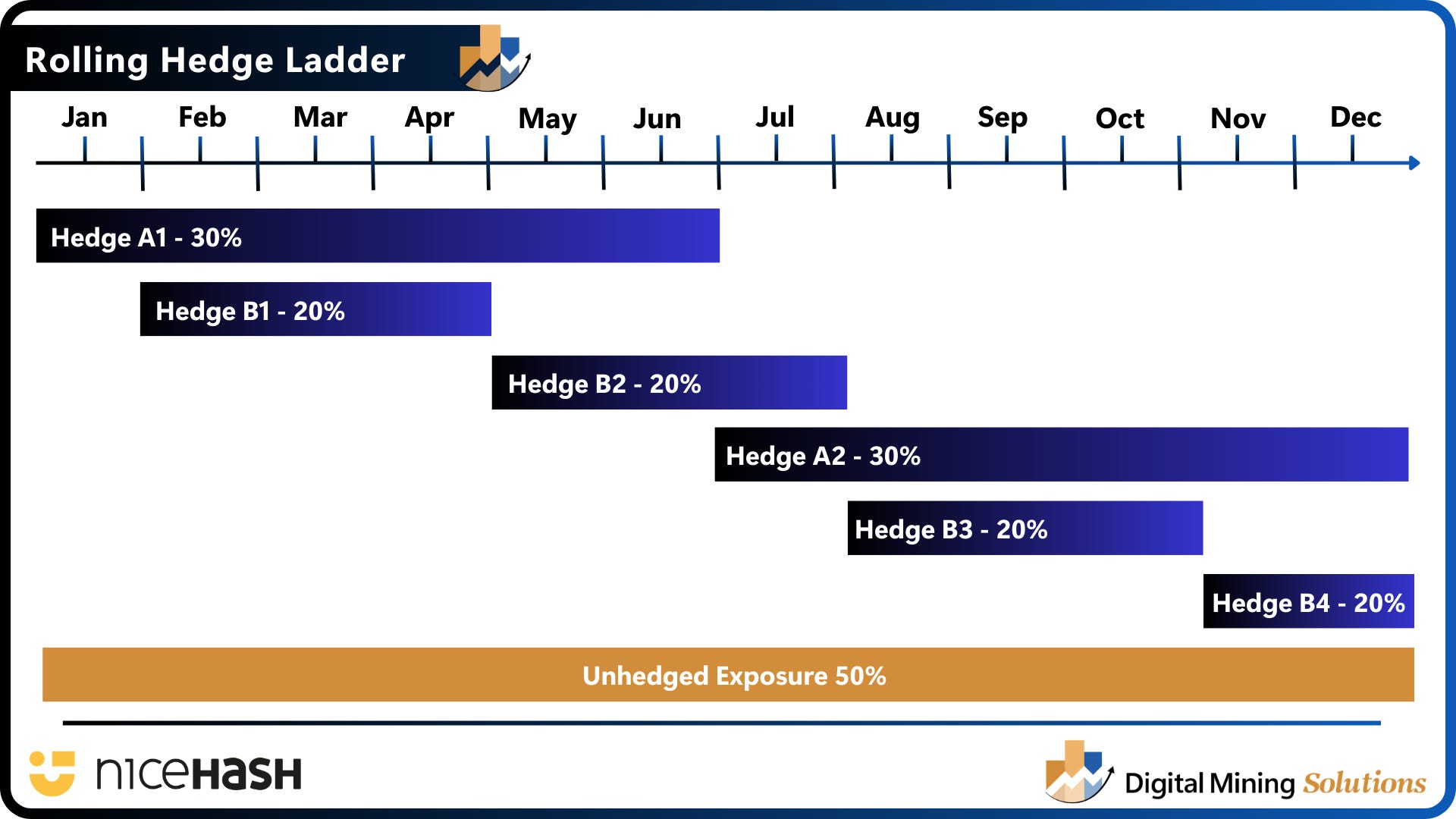
A rolling hedge is not a single hedge placed once and forgotten. Instead, it is a continuous strategy where exposures are hedged gradually over time and extended forward as contracts expire.
Rather than locking in all future production today, a company hedges in layers. For example, it may hedge a portion of next quarter’s output, a smaller portion further out, and keep some exposure open. As time passes, the hedge window moves forward: expiring contracts are replaced with new ones.
This approach exists for several reasons.
First, it reduces timing risk. Locking everything at once risks fixing prices at the worst point in the cycle. By hedging incrementally, companies average their entry across time.
Second, forecasts improve closer to delivery. Production levels, demand, and market conditions become clearer over time, so companies prefer to hedge gradually as uncertainty falls.
Third, rolling hedges balance stability and optionality. They secure a baseline level of predictable revenue or cost, while leaving room to benefit from favourable market moves.
This is why rolling hedges are the dominant model in commodity markets, FX management, and energy procurement.
How Rolling Hedges are Used in Commodity Sectors
Oil producers provide one of the clearest examples. An energy company typically does not hedge all its future barrels at once. Instead, it hedges a portion of next year’s production, a smaller portion of the following year, and gradually adds new hedges as time passes. This ensures the company always has a floor price protecting its cash flow, without completely giving up upside in a bull market.
Airlines use a similar approach when hedging jet fuel. They lock a portion of their fuel needs months ahead, add new contracts as earlier ones expire, and maintain a mix of fixed and floating exposure. This allows them to keep ticket pricing stable while still benefiting if fuel prices fall.
Foreign exchange hedging works the same way. A multinational company earning revenue in dollars but paying costs in euros will hedge currency exposure in tranches. Each month or quarter, it replaces expiring hedges with new ones further out. The result is a continuously rolling protection window.
Across these industries, the goal is not to eliminate volatility entirely. It is to ensure that enough of the business is stabilized to support long-term planning and financing.
Why Bitcoin Miners Should Care About Hedging
For miners, hedging is often misunderstood as a speculative or optional tool. In reality, it is increasingly becoming a prerequisite for survival.
Mining revenue is inherently unstable. Difficulty can rise quickly, compressing margins. Bitcoin price can swing dramatically. Transaction fees are unpredictable. Hardware depreciates rapidly, meaning ROI windows can shrink unexpectedly.
At the same time, miners increasingly rely on financing. Debt, hosting commitments, infrastructure investments, and long-term site development all require predictable cash flow. Without some form of revenue or cost stabilization, miners risk being forced to sell machines or Bitcoin at the worst possible time.
Hedging allows miners to transform mining into a financeable infrastructure business. It enables them to guarantee minimum operating margins, protect debt service coverage ratios, and maintain optionality to expand.
What Miners can Hedge
Miners have two primary levers to hedge: revenue and electricity.
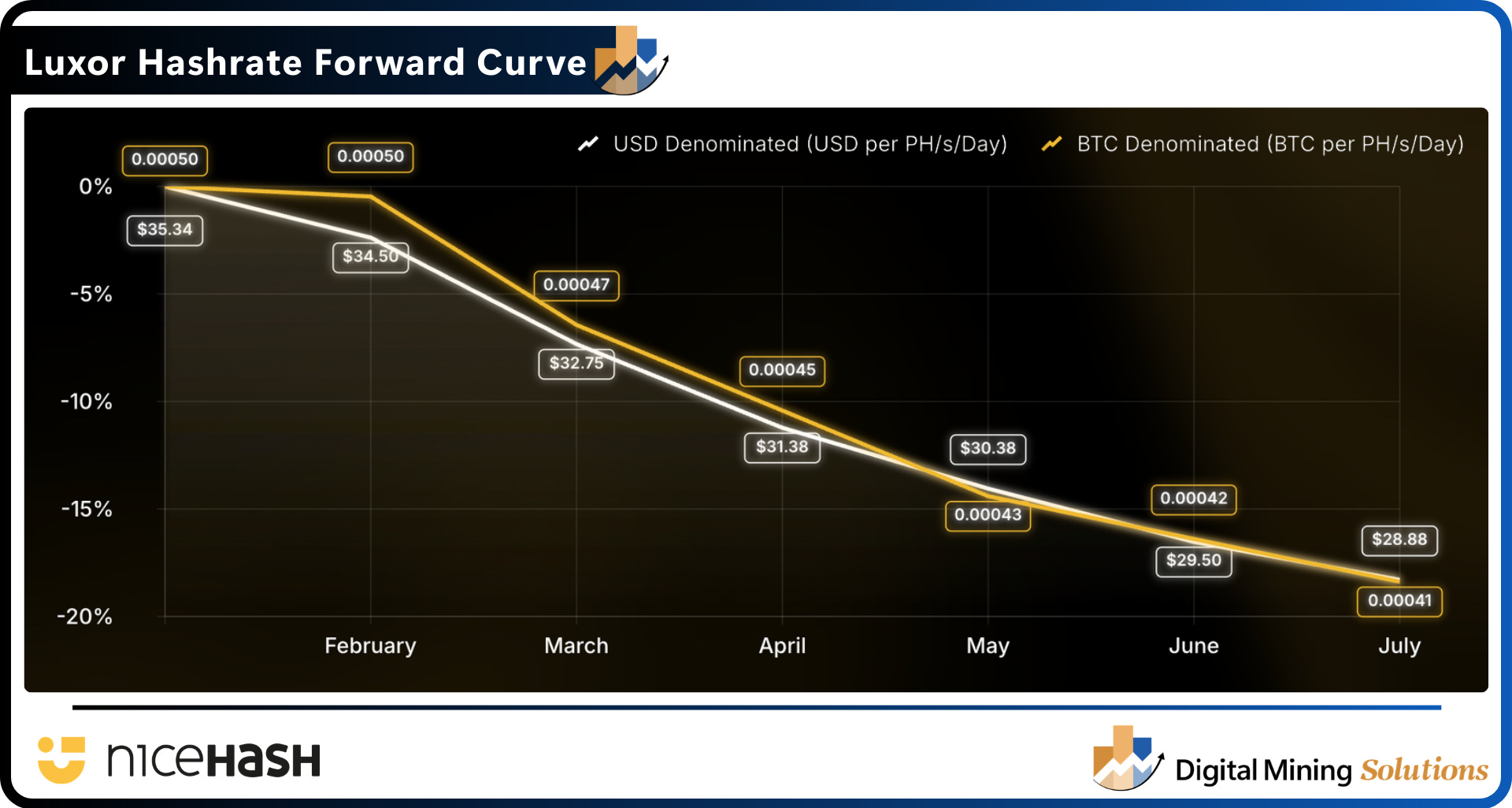
On the revenue side, the main instrument is the hashrate forward. This is a contract where a miner locks in a fixed revenue rate per unit of hashrate for a future period. Instead of being fully exposed to future hashprice, the miner secures a known income stream. This protects against difficulty surges or market downturns that would otherwise reduce earnings.
On the cost side, miners can hedge electricity. This can be done through fixed-price power purchase agreements, forward contracts, or financial electricity futures. Seasonal hedging strategies can be particularly effective, for example in hydro-dominated markets winter power carries higher volatility risk, while spring melt seasons often produce structurally cheap electricity. A miner can hedge more heavily in high-risk winter periods and rely more on spot power during surplus seasons.
Together, these two hedges address both sides of the mining equation: what you earn and what you pay.
As mining matures, the winners won’t just produce Bitcoin, they’ll manage risk like infrastructure businesses. Hedging doesn’t remove volatility, but it transforms how miners scale through it. In the premium section, we how miners can apply rolling hedging strategies.
Leverage data-driven insights and a powerful network to launch strong, optimize efficiently, and scale with confidence. We offer:
Market Intelligence - Masterclasses, Tailored Reports & Articles and Industry Benchmarks.
Advisory Services - Business Plan Assessment, Investor Presentations, M&A Advisory and Executive Coaching.
Sites & Rackspace - Due Diligence & Partnership Matchmaking, Institutional Investment Guidance and Rackspace Sales
Elevate your mining operation today with Digital Mining Solutions!
If you enjoy the content, if you have not subscribed, please ensure to click the button below and share The Bitcoin Mining Block Post.
If you want to stay ahead in the world of Bitcoin mining, make sure to follow me on Twitter and LinkedIn. Would you like to become a sponsor of the newsletter or are you interested in a workshop on mining economics? Contact me at nicosmid@digitalminingsolutions.tech.